
UNDERSTANDING FEVER IN CHILDREN
UNDERSTANDING FEVER IN MONSOON
A Parent's Guide to Spotting, Preventing & Managing Monsoon Fevers
By Dr. Apoorva B. Shah • Consultant Pediatrician & Neonatologist
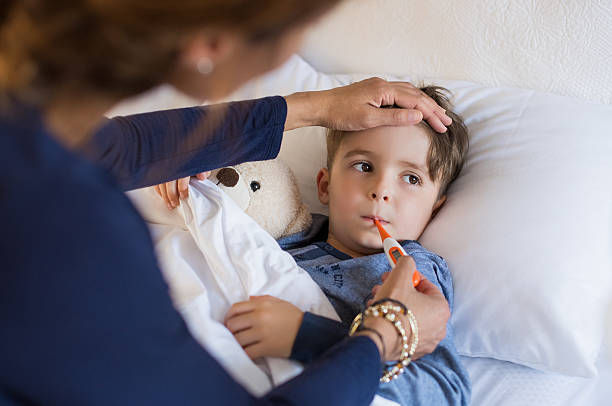
Every monsoon, clinics fill up with one complaint more than any other: "Doctor, my child has fever again." As a pediatrician, I understand how unsettling this is for parents — fever can feel alarming, especially when the news is full of dengue and typhoid cases. This guide takes fever itself as the starting point: what it actually is, how to measure it correctly, what else to watch for alongside it, when to worry, what tests we may order, and exactly how to care for your child at home — plus a clear brief on febrile seizures, a fear many parents carry silently.
What Exactly Is Fever in Children?
Fever is not an illness by itself — it is the body's natural defense response, a sign that the immune system has detected an invader and is fighting it. In children, fever is generally defined as:
• Normal body temperature: around 97°F–99°F (36.1°C–37.2°C), varying through the day
• Fever: 100.4°F (38°C) or higher
• Low-grade fever: 100.4°F–102°F (38°C–38.9°C)
• High-grade fever: above 102°F (39°C)
A mild fever is often the body doing its job well. What matters more than the number on the thermometer is how your child looks and behaves, and what other symptoms accompany the fever — which is why this guide looks at fever together with its companions, not in isolation.
How to Measure Temperature Correctly
Inaccurate measurement is one of the most common reasons parents either panic unnecessarily or miss a real fever. A few practical rules:
• Digital thermometers are safest and most reliable for home use — avoid mercury glass thermometers due to breakage and mercury exposure risk.
• Underarm (axillary) reading is easiest and safe for all ages, but reads about 0.5–1°F lower than actual body temperature.
• Ear (tympanic) thermometers are quick and fairly accurate after 6 months of age, but wax build-up can distort readings.
• Oral readings are reasonably accurate but only suitable once a child can safely hold the thermometer under the tongue (usually above 4–5 years).
• Wait at least 20–30 minutes after a bath, hot drink, or vigorous activity before measuring — these can give falsely high readings.
• Keep a simple written or phone note of the time and reading each time you check — this record is extremely useful for your doctor.
Why Does Monsoon Bring More Fevers?
Rain itself does not cause illness — but the conditions it creates are ideal for germs and mosquitoes to thrive:
• Standing water in pots, tyres, and coolers becomes a breeding ground for mosquitoes.
• Flood and rainwater can mix with drinking water sources, spreading waterborne infections.
• High humidity helps bacteria and viruses multiply faster than in dry weather.
• Children spend more time indoors and in crowded classrooms, making viral spread easier.
Myth vs Fact Myth: Getting wet in the rain causes fever. Fact: Fever is caused by germs and mosquito-borne infections — not rain itself. A wet, chilled body can lower immunity temporarily, which is why hygiene and dry clothing still matter. |
Brief of Common Monsoon Fevers
Not all monsoon fevers are the same. Here is a quick reference to help you recognise patterns — but always let your pediatrician confirm the diagnosis with an examination and appropriate tests.
Illness | Typical Fever Pattern | Watch For |
Dengue | Sudden high fever, 3–7 days | Severe body ache, rash, low platelet count, bleeding gums |
Malaria | Fever with chills & sweating cycles | Recurs every 1–2 days, sweating episodes |
Typhoid | Low-grade fever that climbs and lingers | Prolonged fever beyond 5–7 days, abdominal pain, weakness |
Hepatitis A | Mild fever with fatigue | Yellow eyes/skin, dark urine, loss of appetite |
Viral Fever / Flu | Short fever, 2–4 days | Cold, cough, body ache, usually self-limiting |
Fever Rarely Comes Alone — Track What Comes With It
The pattern of fever matters, but the symptoms travelling with it matter just as much for reaching the right diagnosis. Before you call or visit us, tick whichever of these your child has — this quick record helps us assess faster:
☐ Rash or red spots on the skin
☐ Body ache / joint pain
☐ Headache
☐ Vomiting
☐ Loose motions / diarrhoea
☐ Cough, cold, or sore throat
☐ Abdominal pain
☐ Poor appetite or refusing feeds
☐ Unusual tiredness or low activity
☐ Pain or burning during urination
☐ Bleeding from gums or nose
Bring this checklist (or a photo of it) to the consultation — it saves valuable time and helps us narrow down the cause quickly.
Emergency Warning Signs — Don't Wait
🚨 See a doctor immediately if your child has:
|
Early evaluation saves lives — trust your instinct if something feels "off" with your child, even if fever is not very high.
What Investigations Might the Doctor Suggest?
For a short fever with no other worrying symptoms, we often simply monitor and treat supportively — not every fever needs a blood test. But if fever is high, prolonged, or accompanied by concerning symptoms, some common tests include:
Test | Why It's Done |
CBC (Complete Blood Count) | Checks white cell response and platelet count — important in dengue and general infection screening |
Dengue NS1 / IgM / IgG | Confirms dengue infection; timing of the test depends on which day of fever your child is on |
Malaria rapid test / peripheral smear | Detects malaria parasites, especially relevant with chills and sweating cycles |
Typhidot / blood culture | Helps confirm typhoid, particularly for fever lasting beyond 5–7 days |
Urine routine & microscopy | Rules out a urinary tract infection, a common hidden cause of unexplained fever |
Liver function test (LFT) | Ordered if jaundice, yellow eyes, or Hepatitis A is suspected |
Chest X-ray | Considered if there is persistent cough, breathing difficulty, or chest signs |
We choose tests based on your child's specific symptoms, fever pattern, and clinical examination — not all children need all tests. Please don't hesitate to ask us why a particular test is being recommended.
Why Timely Care Matters
Delaying evaluation of a persistent or high fever is one of the most preventable reasons children develop complications from otherwise treatable illnesses. Acting early helps in several ways:
• Conditions like dengue and typhoid are far easier to manage when caught in the first few days
• Dehydration — a major risk with fever, vomiting, or diarrhoea — is easiest to correct early
• Correct diagnosis avoids unnecessary or repeated medication
• It reduces parental anxiety and avoids last-minute emergency visits
• For a few conditions, specific windows of time affect how certain tests should be interpreted (for example, dengue NS1 vs IgM testing depends on day of illness)
Monitoring Your Child At Home
If your doctor advises home monitoring rather than immediate investigation, track these simple things and note them down:
• Temperature: check every 4–6 hours, and note the time and reading
• Fluid intake: is your child accepting water, milk, or ORS normally?
• Urine output: fewer wet diapers or infrequent urination is an early dehydration clue
• Activity & alertness: playful and responsive versus unusually drowsy or irritable
• New symptoms: rash, bleeding, persistent vomiting, or abdominal pain appearing later
A simple habit that helps enormously: keep a small "fever diary" — date, time, temperature, medicine given (if any), and how your child seemed. This single sheet often speeds up diagnosis significantly.
Febrile Seizures — What Every Parent Should Know
Few things frighten parents more than watching a child seize during high fever. Febrile seizures are common and, in the vast majority of cases, not dangerous — but it helps enormously to know what to expect.
• They occur in about 2–5% of children, typically between 6 months and 5 years of age.
• They are usually triggered by a rapid rise in temperature, not necessarily by how high the fever is.
• A simple febrile seizure involves stiffening or jerking of the whole body, lasts under 15 minutes, and does not recur within 24 hours.
• Most children recover fully with no lasting effect on brain development or learning.
First Aid If Your Child Has a Febrile Seizure
|
🚨 Rush to the hospital if:
|
Every child who has had a febrile seizure should still be evaluated by a pediatrician afterward, even if it stopped on its own — this is about ruling out other causes, not because the seizure itself is usually dangerous.
Your Prevention Action Plan
1. Environmental Protection
• Empty and clean coolers, flowerpots, and buckets every week.
• Cover all stored water containers with tight lids.
• Clear blocked drains and gutters around your home regularly.
• Use mosquito nets, repellents, and full-sleeved clothing, especially at dawn and dusk.
2. Food & Water Safety
• Serve only boiled or properly filtered water.
• Offer freshly cooked, hot meals — avoid street food and cut fruit during monsoon.
• Skip ice from unknown sources and store leftovers in covered containers.
3. Hand Hygiene
• Teach the 20-second handwash — before meals, after the toilet, after outdoor play, and after sneezing or coughing.
4. Nutrition to Build Immunity
• Vitamin C: oranges, lemon, amla, guava
• Greens: spinach, broccoli, peas
• Protein: eggs, dal, paneer, nuts
• Hydration: 6–8 glasses of clean water daily
A simple trick that works well with children: encourage a "rainbow plate" with at least four colours of fruit and vegetables each day.
5. Vaccination — Your Child's Best Shield
Several monsoon illnesses are preventable through timely vaccination. Please check with us if your child's schedule is up to date for:
• Typhoid vaccine — protects against typhoid fever
• Hepatitis A vaccine — shields the liver from infection
• Influenza (flu) vaccine — reduces seasonal viral fever and its complications
• MMR vaccine — protects against measles, mumps and rubella
Think of a vaccine as a training session for your child's immune system: it teaches the body to recognize and defeat a germ quickly, before illness takes hold. Vaccines do not "cause" the disease — a common and understandable worry among parents, but not supported by evidence.
If Your Child Develops Fever: What To Do
• Keep your child well-hydrated with water, ORS, or fluids as advised.
• Dress in light, breathable clothing and keep the room comfortable — avoid over-bundling.
• Use only the fever medication and dosage your pediatrician has recommended for your child; never self-medicate or repeat doses on your own.
• Avoid over-the-counter painkillers unless prescribed, particularly if dengue is suspected, as some medicines can increase bleeding risk.
• Monitor closely for the warning signs listed above.
• Book a consultation if fever persists beyond 48–72 hours, or sooner if your child looks unwell.
• If sponging is advised, use lukewarm water only — never cold water, ice, or alcohol rubs, which can cause shivering and paradoxically raise core temperature.
A note from Dr. Shah: Most monsoon fevers are manageable with early attention and the right care. The goal of this guide is not to alarm you, but to help you act early and confidently — that is often the biggest difference between a quick recovery and a complicated one. |
Myth vs Fact: Febrile Seizures ❌ Myth: A febrile seizure means brain damage. ✅ Fact: Simple febrile seizures do not harm the brain or affect learning in the vast majority of children. ❌ Myth: Controlling fever always prevents febrile seizures. ✅ Fact: Fever-reducing medicine does not reliably prevent them, since seizures are linked to the speed of temperature rise, not the fever number. |
Family Action Checklist
Print this page or save it — tick these off as a family this week:
☐ Covered all water containers at home
☐ Cleaned coolers, flowerpots & drains
☐ Mosquito nets/repellents in use at night
☐ Everyone washing hands correctly and often
☐ Drinking only boiled or filtered water
☐ Eating fresh, home-cooked meals
☐ Vaccinations reviewed and up to date
☐ Basic first-aid/fever kit ready at home
🗳️ Quick poll: Had your child had a fever last monsoon season?
Yes
No
Not Sure
Stay Connected
If you found this guide useful, share it with other parents in your school or building group — prevention works best as a community effort. For personalized advice, vaccination scheduling, or if your child is unwell, reach out to us directly.
Book your First Consultation with us...
📞 Emergency: 7435081000
📧 Email: care@velocitykidscare.com
🌐 Website: www.velocitykidscare.com

Comments